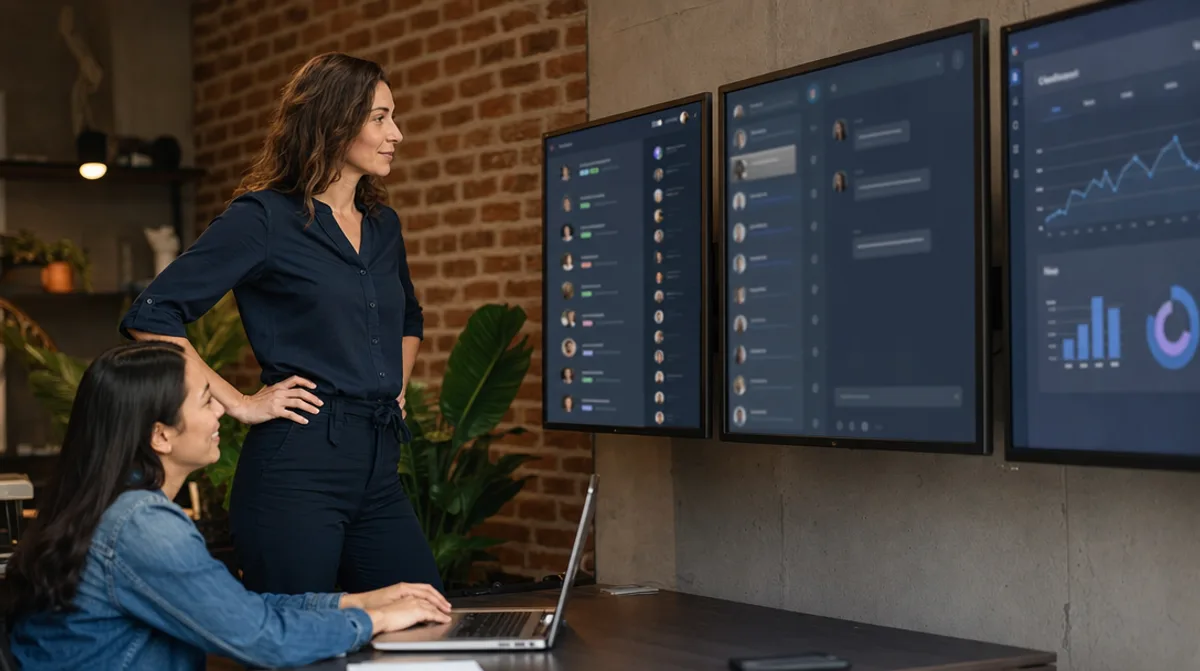
AI Agents Built Around Real Small-Business Work
TAM designs AI Employees that support defined calls, lead capture, scheduling, service, and operational tasks while preserving approvals, escalation, and human judgment.
What Is AI Agents for Small Business?
An AI agent is software configured to use approved knowledge, follow defined rules, interact with compatible systems, and route exceptions to a person. TAM calls these systems AI Employees because each implementation starts with a clear role, responsibilities, boundaries, knowledge sources, and manager. They can support tasks such as routine call handling, lead qualification, follow-up, appointment requests, common service questions, status updates, and repeatable operational steps. They do not replace the relationships, judgment, accountability, or complex decisions that belong to people. We begin with one documented workflow, test it in a controlled setting, and expand only when the evidence and business need support the next step.
What Makes This Different
Each AI Employee begins with a defined role, approved knowledge, explicit limits, tool permissions, review criteria, and human escalation rather than a generic chat experience.
Built Around Your Goals
Plan the Right Scope
Tell us what you need to improve. We will review your goals, current marketing, and the services that fit before recommending next steps.
- Clear role, responsibilities, exclusions, and escalation rules
- Approved knowledge sources and client-facing language
- Compatible CRM, calendar, phone, email, and application integrations
- Controlled rollout and review before broader deployment
We will define the recommended scope, timeline, and handoff terms before work begins.
What You Get
Defined Role and Boundaries
Document what the AI Employee may do, may not do, which information it can use, and when it must route the work to a person.
Approved Knowledge
Use reviewed services, policies, intake rules, frequently asked questions, and brand language rather than relying on open-ended assumptions.
Tool Permissions
Connect only the systems and actions required for the approved role, subject to access, API, security, and reliability requirements.
Reviewable Activity
Preserve available transcripts, events, bookings, routes, and escalations so the team can inspect results and correct issues.
Human Escalation
Route uncertainty, exceptions, sensitive situations, and tasks requiring judgment to the responsible person with available context.
Ongoing Updates
Update knowledge, rules, permissions, and workflow steps through the agreed support and approval process.
How It Works
Workflow Audit
Review repeatable or response-heavy tasks and identify one practical role with clear business value, available data, and manageable risk.
Role and Knowledge Design
Document responsibilities, limits, knowledge sources, language, integrations, permissions, and escalation paths for approval.
Controlled Test
Test expected conversations, edge cases, tool actions, and handoffs before the AI Employee is used more broadly.
Approved Deployment
Release the approved role, train the responsible users, review agreed signals, and consider expansion only after the first workflow is stable.

Ready to Get Started with AI Agents for Small Business?
Tell us about your goals. We will recommend a clear marketing plan and next steps based on your business.
No pressure. Just a direct conversation about what will help your business grow.
FAQ
AI Agents for Small Business FAQ
Related Services
App Development
Custom web and mobile applications built around approved business requirements, integrations, permissions, and workflows.
AI Receptionist
AI-assisted call handling, approved responses, scheduling, routing, and human handoffs configured around your business rules.
AI Workflow Automation
AI workflow automation and business process services that reduce repetitive admin work and keep handoffs organized.
Custom AI Automation
Custom chat, voice, and workflow automation configured around approved business needs, systems, and handoffs.